For two millennia, capital flowed between Europe and Asia along the most natural trade route on earth. Today, less than 1% of global flows travel this corridor. We deploy capital where history says it belongs.
Before there were stock exchanges, before there were banks, before there were nations as we know them today, there was the corridor. A continuous flow of goods, ideas, and capital stretching from the ports of the Mediterranean to the shores of the South China Sea. Roman coins buried in the soil of Kerala. Venetian glass in the courts of the Mughal Empire. Dutch guilders financing pepper plantations in Malacca.
This was not incidental trade. It was the backbone of global commerce for over two thousand years. The Europe-Asia corridor represented 15 to 30 percent of all capital flows on earth during most of recorded economic history. Empires rose and fell along its route. The wealth of Venice, Amsterdam, and London was built on it. The spice trade alone financed the Age of Exploration.
Then, in the span of a single century, this ancient corridor was abandoned. The Cold War split it in two. European capital turned inward. Asian growth oriented toward America. By 2026, the Europe-Asia corridor still represents less than one percent of global capital flows. The oldest, most natural economic relationship on earth has become the most neglected.
We believe this is a historic anomaly, not a permanent state. Invest Eurasia was founded on this conviction — initially structuring Indian capital through Singapore and Malaysia into Dutch residential real estate, and since expanding across technology, healthcare, hospitality, and property on both sides of the corridor. The thesis has always been the same: deploy capital where geography says it belongs.
“The demand for Asian goods and the supply of European capital were sufficiently strong to overcome even the fall of Constantinople. Political disruption could not break what geography made natural.”Invest Eurasia Research, 2026
From Roman pepper merchants to Dutch spice monopolies, the Europe-Asia trade corridor has survived every empire, every war, and every political upheaval in human history. Until now.
120 ships departed Egypt annually for India’s Malabar Coast. Roman coins found across Kerala document enormous capital flows. Pepper, silk, and spices flowed west; wine, glass, and precious metals flowed east. The Silk Road connected Rome to China through Kushan intermediaries.
Venice controlled Eastern goods into Europe, commanding vast markups on pepper and spices. Marco Polo spent 24 years trading in Asia. Zheng He’s fleet of 317 ships sailed from China to East Africa. Even the Ottoman conquest of Constantinople in 1453 could not break the corridor.
Portugal seized Goa, Malacca, and Hormuz. The Dutch East India Company (VOC) controlled spice production for 150 years. The British East India Company handled 50% of world trade at its peak. Tea, opium, cotton, and silk financed the Industrial Revolution.
Independence movements severed colonial trade links. The Cold War split the corridor into competing blocs. The Asian Tigers oriented their exports toward America, not Europe. EU formation directed European capital inward. In 50 years, two millennia of trade patterns were dismantled.
41% of global capital flows concentrate in the United States. EU-ASEAN FDI represents just 11% of ASEAN’s total inflows. The Europe-Asia corridor accounts for less than 1% of global capital flows — the lowest proportion in over two thousand years of recorded economic history.
After decades of neglect, governments are catching up. India and the EU concluded the world’s largest free trade agreement in January 2026 — two billion people, 25% of global GDP — catalyzed by U.S. tariff policy that pushed both sides to the table. The EU is simultaneously negotiating FTAs with Indonesia, Malaysia, the Philippines, and Thailand. The political realignment is structural, not cyclical. The corridor is reopening at a sovereign level.
The share of global capital flowing between Europe and Asia is at the lowest point in recorded economic history. This is not a trend. This is an anomaly.
The annual infrastructure investment gap in Asia alone exceeds $200 billion. European capital deployed to the corridor at current valuations could generate returns 2–3x higher than domestic alternatives. Asian assets trade at 10–15x earnings versus 20–30x in saturated Western markets.
The conditions for corridor rebalancing have never been stronger. Six structural forces are converging to make this the optimal entry point.
The corridor survived the fall of Constantinople, the Portuguese monopoly, decolonization, and the Cold War. The economic complementarities are deep and persistent. Temporary political disruptions have never permanently broken it.
Asia grows at 5–6% annually versus 2–3% for developed Europe. India alone adds the equivalent of Thailand’s GDP every year. ASEAN’s middle class is expanding at 10% annually. Europe’s savings surplus must look outward for returns.
Asian assets trade at 10–15x P/E with 6–7% growth. US markets sit at 20–30x P/E with 2% growth. European capital deployed to Asia at current valuations can generate returns 2–3x higher than domestic alternatives.
Europe is aging. Median age rising, working-age population shrinking, consumption mature. Asia has 2.1 billion people, young and urbanizing. 300 million entering consumer markets annually. These are not competing economies — they are complementary ones.
Post-COVID, corporations are diversifying away from China-centric supply chains. India and Southeast Asia are primary beneficiaries. European companies are nearshoring operations to Asia. Capital follows supply chains.
41% of global FDI concentrates in the United States. Intra-European flows dominate the rest. Capital deployed to overcrowded markets faces compressed returns and heightened competition. The corridor offers structural alpha.
We believed in the Europe-Asia corridor thesis years before policymakers did. Now the world's largest economies are formalizing what geography always made inevitable.
In January 2026, India and the European Union concluded the largest free trade agreement in history. The catalyst was not economics alone — it was American tariff policy, which pushed two of the world's three largest economies toward each other. The corridor that Invest Eurasia was built on is now the subject of state-level strategy.
After 20 years of negotiations, India and the EU finalized the world’s largest free trade zone: 2 billion people, 25% of global GDP. The deal aims to double bilateral trade to $200 billion by 2030 — validating the corridor thesis at a sovereign level.
Washington’s 50% tariffs on Indian goods and threats of 30% on European exports forced both sides to the table. Twenty years of stalled talks concluded in weeks. American protectionism is accelerating exactly the corridor re-emergence we anticipated.
The India deal is not isolated. The EU concluded a comprehensive partnership with Indonesia in July 2025, and is actively negotiating FTAs with Malaysia, the Philippines, and Thailand — targeting a comprehensive strategic partnership with all of ASEAN by 2027.
The political realignment now underway is structural, not cyclical. As the United States retreats into protectionism, Europe and Asia are rebuilding the corridor that connected them for two thousand years. Invest Eurasia positions capital ahead of this re-emergence — not in response to it.
Cross-border investments spanning technology, healthcare, real estate, infrastructure, and hospitality across India, Southeast Asia, the UAE, and Australia.
Southeast Asia’s leading affiliate marketing and commerce media platform. $1.5B GMV, 150M+ transactions, 6 markets. Profitable at 12% EBITDA margin after a disciplined turnaround from loss-making operations.
Acquiring and modernizing veterinary clinics in Greater Kuala Lumpur. First acquisition: a 20-year established emergency veterinary hospital. Technology-enabled operations with custom practice management platform.
Leveraged residential property investments in Melbourne and Adelaide. Exploiting Australia’s favorable tax structure — negative gearing, 80% LTV, and 50% CGT discount — to build a high-returning real estate portfolio.
Grade A warehousing assets in India’s high-growth Tier II cities — Lucknow, Patna, Guwahati, Bhubaneswar. Pre-leased to 3PL tenants and multinationals on long-term contracts with built-in rent escalation. Built and operated by Sovereign Infra, a specialist with three decades of experience in green construction technology.
Modern European fine dining restaurant in Colaba, Mumbai — housed in the iconic colonial-era bungalow on Mandlik Road that once held Indigo. Co-founded with filmmaker Karan Johar and True Palate. 100+ weeks of continuous operation and a cultural landmark in South Mumbai.
India’s fastest-growing restaurant chain, co-founded with Virat Kohli under the True Palate hospitality group. 15+ outlets across Delhi, Mumbai, Bengaluru, Kolkata, Pune, Hyderabad, Jaipur, Indore, Mohali, and Gurugram — with international expansion planned for Dubai and London.
Multi-sensory Indian dining concept by MasterChef India’s Chef Kunal Kapur. Flagship at Dubai Hills Mall with expansion to Abu Dhabi and Delhi. A true Eurasia play — Indian culinary heritage meeting Middle Eastern and international audiences.
Where Invest Eurasia began. A private equity fund deploying Asian capital into high-yielding residential real estate across the Dutch Randstad — leveraging Europe’s cheapest debt against 98% occupancy and a structural housing shortage of 331,000 homes. Asset-backed transcontinental arbitrage at its core.

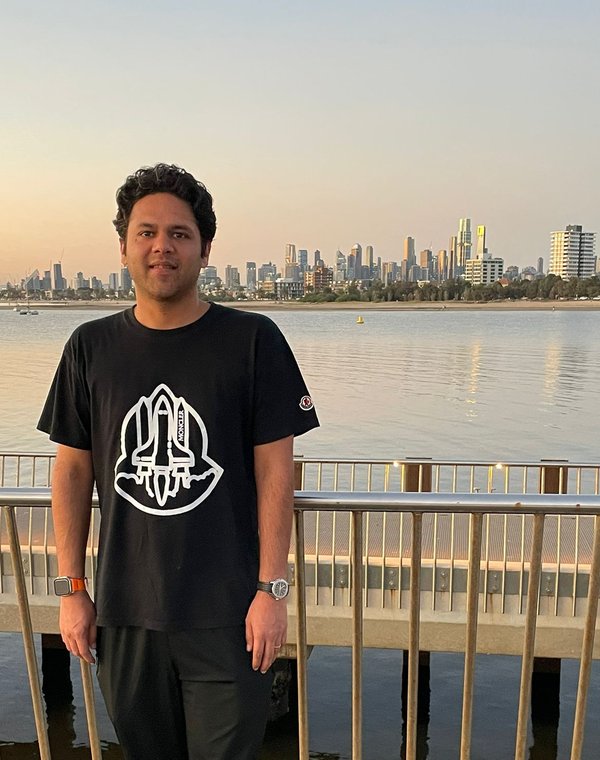
Raghav Narayan comes from a fifth-generation Delhi family rooted in law and land. His family's real estate development business built commercial and residential properties across the capital for decades. He read Economics at St. Stephen's College, earned a law degree from the University of Delhi — practising at the Supreme Court of India and the High Court of Delhi — and completed an MBA at the Asia School of Business in collaboration with MIT Sloan on a full scholarship.
That training across economics, law, and business has defined his career across three continents. At the Indofin Group, he sourced and executed cross-border transactions that read like an early draft of the Invest Eurasia thesis: carving out an aquaculture division from an Italian conglomerate, moving a British consumer brand's manufacturing to India, launching a European storage company into Asia-Pacific, and building a real estate fund around asset-backed debt arbitrage between Asian and European markets. At Involve Asia, a Forbes-listed technology company in Southeast Asia, he led a $12 million Series C at a $100 million valuation and now manages investor relations, M&A, and a potential IPO on Bursa Malaysia.
His portfolio spans hospitality brands across India and the UAE — One8 Commune with Virat Kohli, Neuma with Karan Johar, Pincode with Chef Kunal Kapur — alongside veterinary healthcare acquisitions in Greater Kuala Lumpur through Tails Petcare.
Invest Eurasia formalizes a pattern that is both professional and ancestral: five generations of building, structuring, and deploying capital — now applied across the historic corridor between Europe and Asia.
Managing Partner
St. Stephen's BA · Delhi LLB · MIT Sloan MBA
Kuala Lumpur · New Delhi
For investment inquiries, partnership discussions, or to learn more about the Invest Eurasia thesis.
raghav@investeurasia.comMalaysia
India